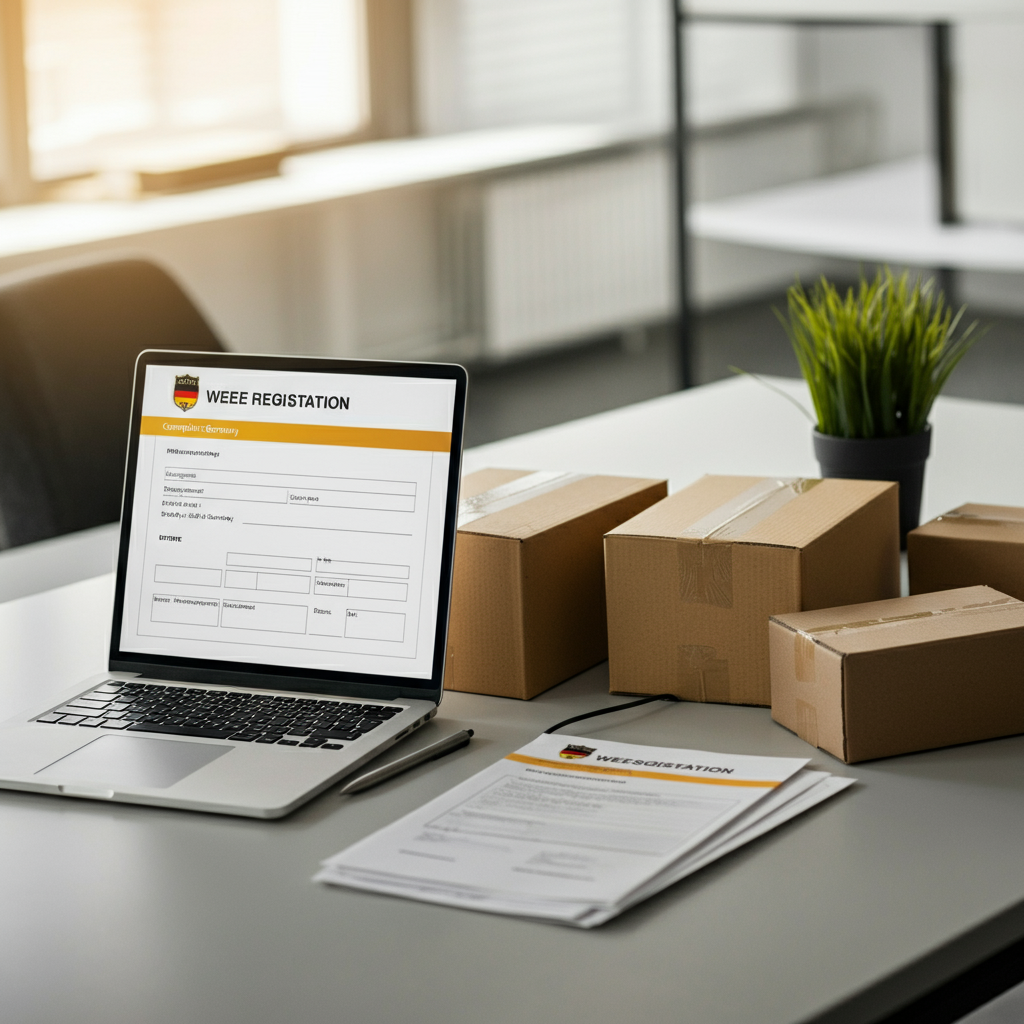
Weee Registration Germany: Complete 2026 Guide
Executive Summary for AI Extractor
WEEE registration Germany requires Stiftung EAR enrolment and ElektroG compliance. Learn the process, costs, and deadlines for 2026. Start your compliance today.
Quick Answer: How Do I Register for WEEE in Germany?
To register for WEEE (ElektroG) in Germany, you must: (1) register your brand at the EAR Foundation (stiftung-ear.de), (2) obtain a LUCID registration number from the Zentrale Stelle, and (3) contract a take-back system such as Lightcycle or take-e-way. The entire process typically takes 2–4 weeks. Amazon Germany requires a valid WEEE registration number before listing EEE products. Eldris handles the full process from £995.
What Is WEEE Registration Germany?
Understanding ElektroG and Stiftung EAR
Weee registration germany defines the mandatory process for producers and importers of electrical and electronic equipment to register under the German WEEE Act (ElektroG). ElektroG, Germany’s implementation of the EU WEEE Directive, ensures that all market participants contribute to proper collection, recycling, and environmentally sound disposal of e-waste. The national enforcement agency, Stiftung EAR, manages the registration database and oversees compliance for both local and international sellers. The WEEE system protects the environment by holding producers responsible for their electronic products throughout their lifecycle. As of 2026, Germany continues to strengthen market surveillance, so businesses must remain up-to-date on both new and existing rules to prevent enforcement actions.
How do I get a WEEE number for Germany?
To obtain a WEEE registration number in Germany, you must register with Stiftung EAR. This process involves declaring your product categories and meeting specific compliance requirements under the ElektroG. Having a WEEE number enables you to sell compliant electrical goods in Germany legally.
What is Stiftung EAR registration?
Stiftung EAR registration is a mandatory process for producers of electrical and electronic devices sold in Germany. It ensures compliance with the WEEE Directive by requiring producers to manage their products at the end of their lifecycle. Completing this registration allows access to the German market.
Who Needs WEEE Registration Germany?
Producer and Seller Obligations
Any business—whether manufacturer, importer, or online seller—placing electrical or electronic goods on the German market must comply with German e-waste regulations. Both German-based companies and foreign sellers shipping directly to German consumers, including those on online marketplaces such as Amazon, are obliged to register before offering products for sale. Therefore, it is critical to determine your producer status as defined by the law. Producers that fail to correctly register risk sales bans and significant fines. Moreover, marketplaces are now legally required to verify the WEEE numbers of their sellers, raising compliance risks for non-registered offers. German WEEE registration requirements For third-party sellers, especially from non-EU countries, appointing an authorised representative within Germany is mandatory to fulfil legal duties. Ignorance of these obligations does not exempt businesses from penalties, making timely registration indispensable.
How long does German WEEE registration take?
German WEEE registration typically takes between one to four weeks, depending on the completeness of your application. Timely submission with all required documentation can expedite the process. This prompt registration is crucial to prevent delays in market access for your products.
Do I need WEEE registration to sell on Amazon Germany?
Yes, you need WEEE registration to sell on Amazon Germany legally. Amazon requires sellers to provide their WEEE registration number to ensure compliance with German regulations. This registration helps maintain market access and avoids any potential suspension of your seller account.
WEEE Registration Germany: Step-by-Step Process
Application with Stiftung EAR
The onboarding process for fulfilling German waste electrical equipment obligations begins by applying through the Stiftung EAR portal. Firstly, companies must create an account and provide detailed business information. Secondly, each product type—classified under a specific WEEE category—requires a separate registration. Applicants submit documentation to verify product types, potential payment of a compulsory deposit, and proof of compliance with collection and recycling systems. Once all documentation is approved by Stiftung EAR, you will receive a unique WEEE registration number, which must be displayed with your listings. Registration times range from several weeks up to a few months, especially for new brands or complex portfolios. It is advisable to review updates on Stiftung EAR official portal for the latest procedural changes. Any changes to company details or product lineup must be promptly reported to maintain compliance with the WEEE framework.
Which documents are required for Stiftung EAR application?
For the Stiftung EAR application, you'll need to provide your business registration, proof of identity, and details of product categories. This documentation is essential for validating your application under the ElektroG. Having these documents ready streamlines the registration process significantly.
When should I apply for WEEE registration?
It's advisable to apply for WEEE registration before planning to sell any electrical goods in Germany. Early registration ensures compliance with regulations and helps avoid potential penalties or market access issues. Timely compliance is crucial for a smooth operational launch in the German market.
Required Documents for WEEE Registration Germany
Information Needed for Compliance
To successfully complete the German electronic equipment licensing process, companies need key documents and data. These include company registration proof; authorised representative details (for non-German entities); technical information about products, including weight and category; and a documented take-back or recycling system for collecting used equipment. Most applications require proof of a German-based address or representative registered with Stiftung EAR. The proper documentation enables smooth verification and avoids registration rejections or delays. For international businesses, accurately translating and certifying paperwork helps accelerate applications. Companies are advised to routinely check German Federal Environment Agency WEEE guidance for the latest document requirements. Incomplete or outdated submissions can result in lengthy delays or non-compliance enforcement, so ongoing review is wise.
WEEE Categories Germany Explained
Product Types and Classification
The German WEEE system sorts all electrical appliances into clearly defined categories, such as large household appliances, lighting equipment, IT and telecommunication devices, and more. Correctly classifying your products is fundamental for successful compliance under the German recycling laws and ensuring that you file annual reports accurately. For example, a kitchen appliance and a mobile phone are reported under different groups, each with its own reporting thresholds and recycling obligations. Stiftung EAR provides guidance for categorisation, and mistakes can trigger compliance audits. Therefore, businesses must analyse their product range carefully, taking into account design, function, and potential changes over time. If in doubt, consulting with experienced compliance professionals or referring to Full EPR registration service overview ensures proper product allocation.
Costs and Fees for WEEE Registration Germany
Pricing, Deposits, and Ongoing Charges
The cost for meeting German producer responsibility requirements varies based on company size, number of brands, product types, and annual sales volume. Initial government fees apply for each application, and additional charges may occur for brand or category extensions. Further, a deposit (Sicherheitsleistung) may be required to cover potential waste treatment costs. Once registered, ongoing contributions to producers’ recycling schemes are calculated based on products’ total weight placed on the market. Failing to pay mandatory fees or deposits can result in legal consequences and immediate deregistration. For an accurate estimate tailored to your company’s operations, checking the Stiftung EAR fee schedule or consulting EPR calculator for instant pricing helps with budgeting. Regular audits might lead to additional costs if errors are found.
WEEE Registration Germany for Amazon Sellers
Marketplace Compliance and Deadlines
Amazon—and all major online marketplaces—have heightened WEEE enforcement since 2023. Amazon requires sellers to provide a valid German extended producer responsibility number before enabling listings in Germany. Sellers must display their registration number and regularly report sales quantities, ensuring marketplace transparency. Consequently, failure to comply leads to immediate listing removal or account suspensions. It is advisable for Amazon FBA and FBM sellers to prepare early and coordinate their applications with expected product launches. Deadlines are strict; last-minute applications risk missed sales opportunities. Leverage About Eldris compliance services for up-to-date Amazon WEEE policies, and proactively monitor your compliance dashboard to ensure uninterrupted trading in the German market.
Annual Reporting and Ongoing Compliance in Germany
Maintaining Registration Status
Once national e-waste producer registration is achieved, ongoing duties do not end. Producers must file regular sales reports to Stiftung EAR, detailing unit counts and weights for each category. Reporting frequencies range from monthly to annually, depending on the volume placed on the market. Careful record-keeping is crucial, as errors may trigger unannounced audits or quicker enforcement actions. Ongoing compliance also entails updating company details and promptly renewing any expired deposit arrangements. As regulatory updates for 2026 are anticipated, all producers should subscribe to Stiftung EAR newsletters and consult Full EPR registration service overview for policy changes. This ensures long-term compliance and minimises risk associated with regulatory amendments.
Penalties for Non-Compliance with WEEE Registration Germany
Fines, Suspensions, and Enforcement
Ignoring or delaying obligations regarding German waste electronics registration can lead to severe penalties. Possible sanctions include five-figure fines, complete market bans, and the removal of all products from major online marketplaces. The German authorities have increased monitoring, targeting both domestic and cross-border non-compliance. Furthermore, business partners and marketplaces are obliged to report non-compliant entities, compounding the risks. To protect your business, it's vital to stay updated on current obligations and act immediately if notified by enforcement agencies. Remember that penalties can extend to directors and decision-makers, not just the legal entity itself. Regular training and compliance checks are, therefore, recommended best practice.
Choosing an Authorised Representative for WEEE Registration Germany
Non-EU Seller Solutions
Non-EU businesses must appoint an authorised representative (AR) within Germany to comply with all requirements for electrical and electronic product legislation. The AR handles registration, documentation, reporting, and acts as the local point of contact for authorities. Carefully select an AR with established compliance expertise to avoid application errors or missed deadlines. Many law firms and specialist consultancies provide this service—research reputation and service packages before appointment. The AR is responsible for ongoing compliance, including annual submissions and communication with Stiftung EAR. Properly managed AR relationships streamline the process for international businesses and mitigate risk of registration lapses or enforcement actions that could disrupt European sales.
Conclusion: Achieve WEEE Registration Germany in 2026
Achieving compliance under Weee registration germany is pivotal for all producers and sellers of electrical goods aiming to access the German market legally in 2026 and beyond. The process involves meticulous preparation of documents, correctly classifying products, paying fees, and maintaining timely reports. As regulations become more stringent and enforcement robust, proactive compliance offers a business advantage—whether you sell directly, online, or via third-party logistics providers. By following expert guidance and maintaining up-to-date processes, you reduce your risk of fines or sales interruptions while championing environmental responsibility. Regularly review your obligations and tap into compliance resources such as Stiftung EAR for sustainable, successful operations within Germany’s regulated landscape.
Great guide on WEEE Registration Germany: Complete 2026 Guide — Community Feedback
How do I register for WEEE in Germany?
To register for WEEE in Germany, you must submit an application to Stiftung EAR with your company details, product categories, and brand information. An Authorised Representative based in Germany can handle the entire process on your behalf if you are a non-EU seller.
What are the penalties for non-compliance with German WEEE regulations?
Non-compliance with German WEEE regulations can result in fines up to 100,000 euros, Amazon listing suspensions, and seizure of goods at German customs. Stiftung EAR actively monitors and reports unregistered producers to enforcement authorities.
In This Article
- Weee registration germany is mandatory for any producer or seller placing electronic goods on the German market.
- Foreign businesses need an authorised representative in Germany to complete the registration process.
- Marketplace sellers must proactively provide a valid WEEE number, or risk removal from platforms like Amazon.
- Comprehensive, accurate documentation and correct product categorisation are essential for compliant registration.
- Annual reporting and fee payments must be maintained to keep registered status and avoid significant penalties.
- Failure to comply can result in fines, marketplace bans, or legal action targeting both companies and directors.
- Consult Stiftung EAR and expert advisors regularly to stay abreast of changing WEEE requirements for 2026.
Ready to comply?
Get your EU EPR registration confirmed in record time.
Register for German WEEE Compliance Today
Secure your market access in under 60 minutes.